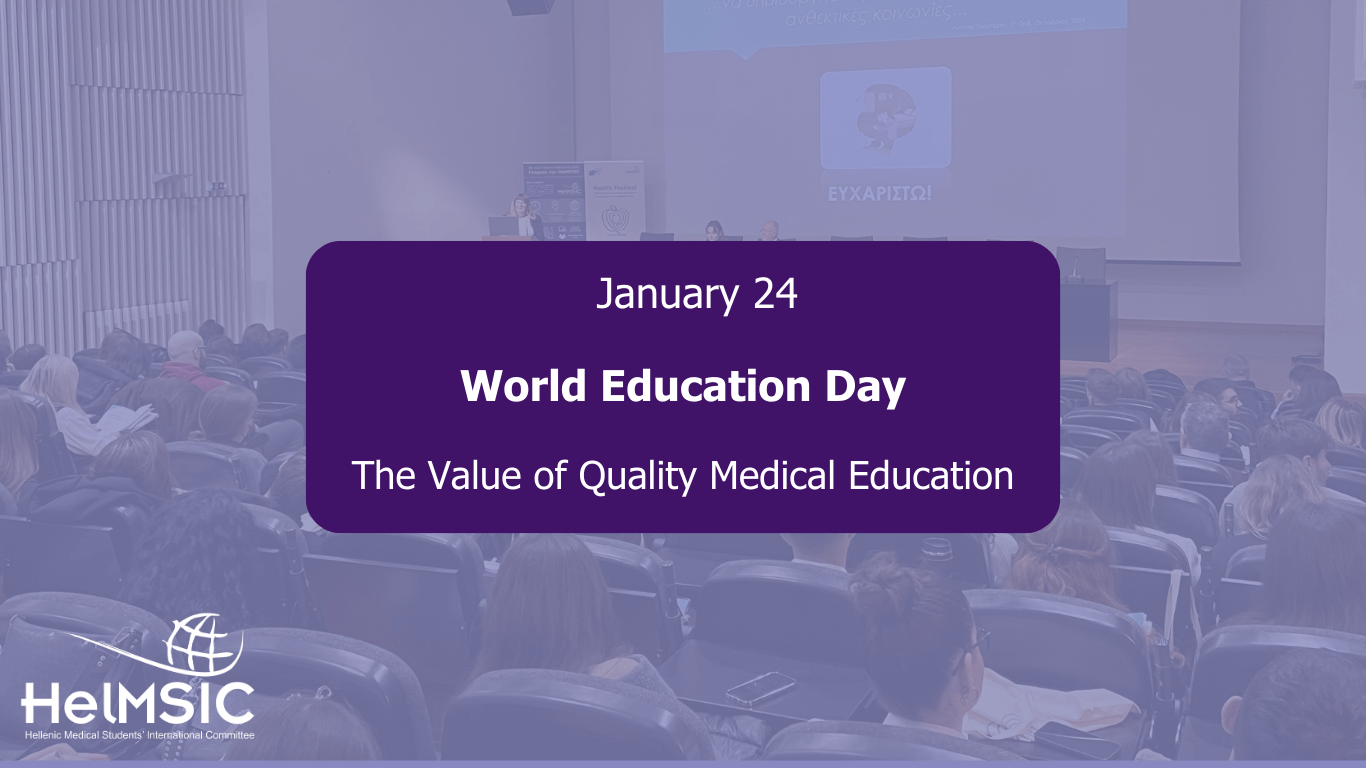
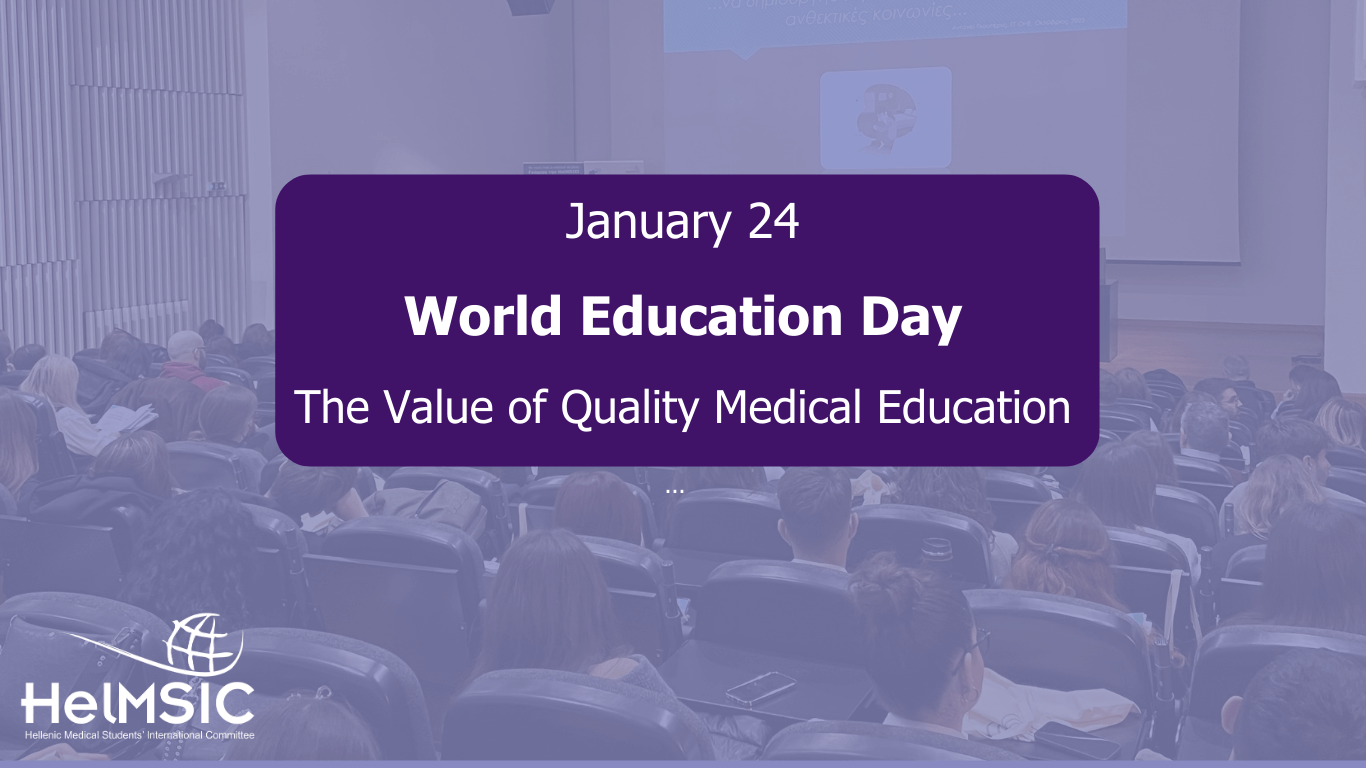
World Education Day (January 24) reminds the entire world that education is a cornerstone for sustainable development, social justice, and the promotion of health. Education is not only the transmission of knowledge; it is the development of skills, the cultivation of critical thinking, and the nurturing of responsible and empathetic professionals.
In the field of medicine, education takes on even greater significance. Medical students must be equipped with theoretical knowledge, practical skills, communication abilities, and decision-making capacity in real-life situations. However, significant challenges remain: education still focuses excessively on theory, opportunities for hands-on experience and applied learning are limited, and students often do not participate actively in shaping curricula.
HelMSIC recognizes that the quality of medical education directly affects the safety, effectiveness, and human dimension of care that future doctors will provide. For this reason, has developed a policy document that assesses the current state of medical education and proposes improvements to medical school curricula. This document provides practical recommendations to enhance theory with hands-on application, develop essential skills, and promote active student participation. It serves as a tool for shaping a more quality-focused and participatory curriculum, thereby strengthening overall medical education.
Through its initiatives, HelMSIC collaborates with faculty members and experts in education and healthcare to provide students with comprehensive, holistic knowledge that prepares them for clinical practice and the management of complex healthcare challenges.
World Education Day reminds us that no medical student should face limitations in their education, and that awareness, engagement, and active participation are responsibilities shared by all of us. As future healthcare professionals, it is our duty to advocate for quality education, actively participate in educational initiatives, and help create a future where medical knowledge is applied with skill, responsibility, and humanity.
Let’s all recognize our role as medical students and take action to promote quality, participatory, and holistic medical education, focused on addressing our modern educational needs.