And when will this world accommodate women?
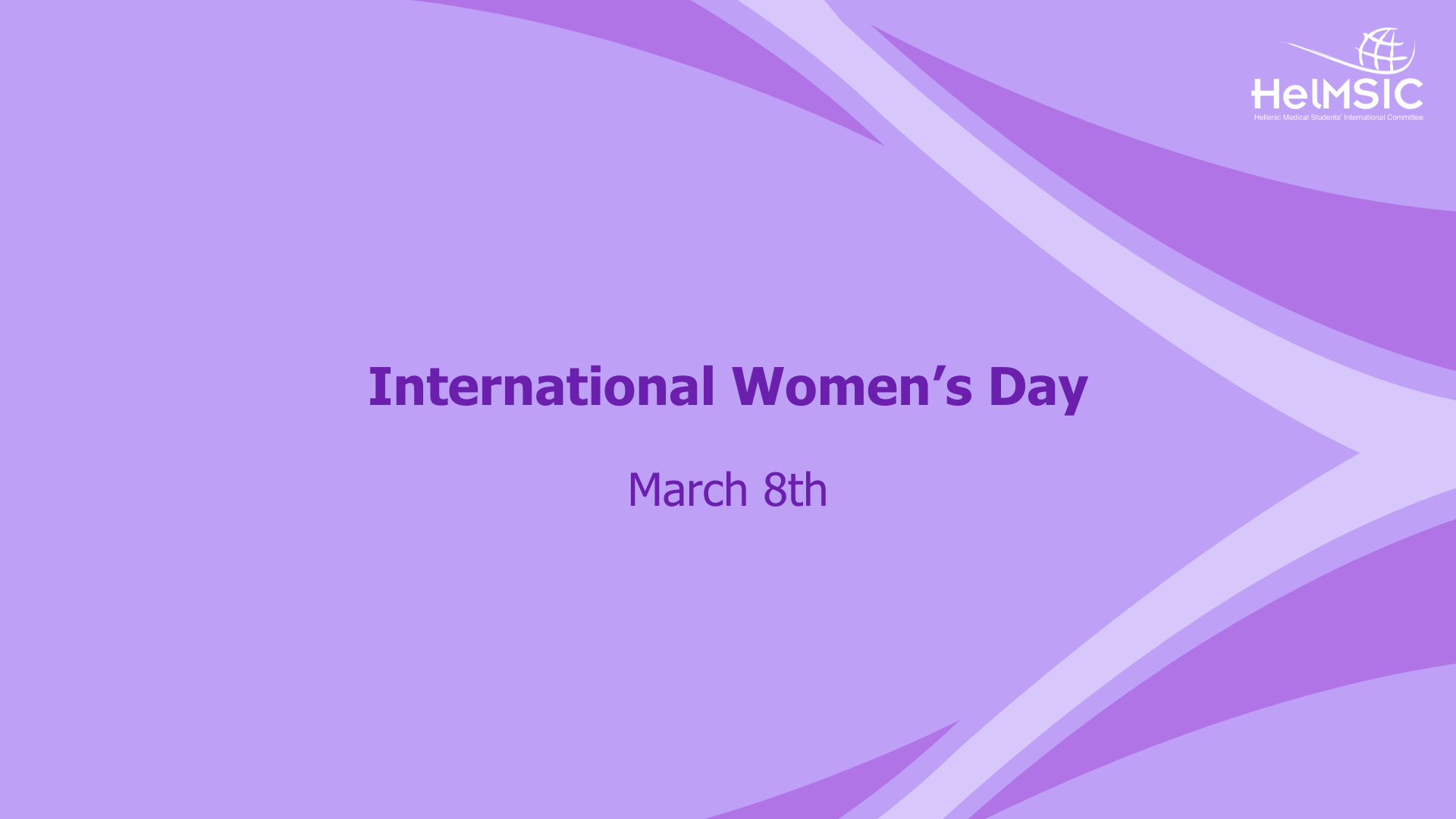
International Women’s Day is celebrated every year on March 8 and is a day to highlight women’s struggle for the recognition of their rights, and the establishment of gender justice and equality. It is certainly not a day of complacency, but on the contrary, it is a call to fight, to claim and secure the freedom to exercise women’s rights. Feminist Gloria Steinem had stated that “we should not think about how women will fit into the world – we should think about how this world will fit women”. As long as femininity continues to hear whistles in the street, they continue to be asked what they were wearing, as long as they are still treated as reproductive machines, without rights or will, nothing has really changed. The world does not fit women. Yet.
The history of celebrating International Women’s Day is long. March 8 was established as International Women’s Day for the first time in 1977 following a UN decision. However, women’s protests began much earlier, on February 28, 1908, as National Women’s Day, in the USA, when unionized textile workers took to the streets to demand, among other things, better working hours, equal pay with their male colleagues and, most importantly, the right to vote, an urgent demand of the first wave of the feminist movement. Subsequently, the celebration of the day spread to Europe, and during the 2nd International (August 26-27, 1910) the feminist Clara Zetkin proposed the celebration of a specific day worldwide in honor of the women’s struggle, on the last Sunday of February. The goal always remained the same – equality. With the rise of the feminist movement in Europe and America, as well as years of demonstrations and women’s struggles for their rights, International Women’s Day is finally established.
But in the 21st century, everything has certainly changed for the better…
The women’s struggle seems victorious, as women can now be educated, work, vote and stand as equals next to men. Women in science are excelling, their presence in politics and activism seems more active than ever, their voice is resonating more and more loudly. They have the full right to self-determination, and they can now freely express their sexuality, without taboos, without shame. Or is it not?
Indeed, according to a United Nations report, women hold 64% of the rights that men have, worldwide. This systematic discrimination prevents women around the world from exercising their basic rights to life, liberty, health, self-determination and education. According to a UN report in 2024, women’s rights have declined by a quarter in recent years. In developing countries, women have no existence beyond their one and only “use”, reproduction. Their rights, although recognized, are compromised, while they live in regimes that deprive them of their freedoms, are abused daily, and do not have access to education, health coverage or self-determination of their bodies.
In the civilized and “developed” West, in the USA, women’s rights are increasingly being undermined, with the right to safe abortion being threatened. In Europe, in the political scene, as the European Commission also reports, the presence of women is weakened, while the salaries of working women are consistently lower than those of their male colleagues.
The patriarchal and deeply rooted belief in the system that women are the property of a man maintains a dominant position in society, judging by the fact that incidents of gender-based violence are increasing rapidly and constitute an integral problem of everyday life. Feminicides, which are a blatant indication of the objectification and possessiveness of men towards women, a term that is still not institutionally recognized in our country, have increased rapidly in recent years. Finally, women seem to be excluded from the universal and fundamental right to health coverage, as they only began to be included in clinical studies in 1993. Just 33 years ago. If one considers that medicine began to develop with the emergence of civilization, one would say that rather (!) late we started to deal with the health of half the population… Research and therapeutic practices do not seem to take into account women’s bodies and basic biological needs; at the same time, there is a lack of complete understanding of how their bodies function, while diseases that affect women in the majority are not well studied.
As much as we wish that reality had granted more space and freedom to women to live with dignity and respect for their nature, the truth is that even today we are far from this. However, there is no room for pessimism and complacency, simply because change seems impossible. As in every other dark period in human history, change comes from the young, and is in fact their responsibility. The new generation, the one that constantly questions and does not cling to stereotypes and outdated views. Even greater, of course, is our responsibility as medical students, as future health professionals. It is imperative that we all be educated, both in matters of women’s health and their substantial inclusion in healthcare, as well as raising our social awareness on gender issues, in terms of equality and social justice. Through reflection, questioning and information, medical students should identify the existing problems in our current way of education, and demand its change, where education is deemed incomplete. We should act in this direction, claiming the right to have our voice and suggestions heard. Our primary goal should also be to transmit our acquired knowledge, in order to inform and raise awareness of the general public, through updates, publications and declarations of our position. In addition, we, medical students, should seek and demand the formation of health environments that are equal and respectful of all, regardless of gender, sexual and national identity. Finally, our role in exerting pressure on the relevant bodies, through organized and systematic actions, is crucial.
HelMSIC recognizes the importance and need for the continuation of the struggle of women, and is an aid in carrying out the role of medical students. It promotes equality among students, ensuring an environment without discrimination and absolute respect for each entity. Furthermore, through actions of its sectors, HelMSIC undertakes the education and information of Medical students, with peer education programs.
If the establishment of International Women’s Day, and its annual celebration, should show us anything, it is that the struggle to claim justice, to create a better world for all of us, begins with us, and is justified, even if this justification is delayed. Women, through their struggle, have managed to secure their place in this world, to secure rights, equally, something that while it should have been self-evident in the centuries of human “civilization”, was not… Is reality still unfavorable for femininity in this world? The answer is, unfortunately, yes. However, this does not mean that their struggle will remain unjust, nor that we should all be complacent. On the contrary, it is a resounding reminder that it is our duty to act and continue the struggle. We owe it to those who started it. We owe it to ourselves. The overthrow of the system that wants women to be inferior will come and must come from us. No matter how difficult it is. No matter how many years pass.
Sources:
- Sansimera. 8 Μαρτίου – Παγκόσμιες ημέρες [Internet]. Athens: Sansimera.gr; [cited 2026 Mar 7]. Available from: https://www.sansimera.gr/worldays/4#goog_rewarded
- European Commission. International Women’s Day 2024: our democracies are stronger when women are involved as equals [Internet]. Brussels: European Commission; 2024 Mar 8 [cited 2026 Mar 7]. Available from: https://commission.europa.eu/news-and-media/news/international-womens-day-2024-our-democracies-are-stronger-when-women-are-involved-equals-2024-03-08_el
- United Nations Regional Information Centre (UNRIC). 8 Μαρτίου: Διεθνής Ημέρα Γυναικών [Internet]. Brussels: UNRIC; [cited 2026 Mar 7].
- United Nations. International Women’s Day [Internet]. New York: United Nations; [cited 2026 Mar 7]. Available from: https://www.un.org/en/observances/womens-day
- International Women’s Day. The history of International Women’s Day [Internet]. London: InternationalWomensDay.com; [cited 2026 Mar 7]. Available from: https://www.internationalwomensday.com/Activity/15586/The-history-of-IWD
- National Women’s History Alliance. History of the women’s rights movement [Internet]. Santa Rosa (CA): National Women’s History Alliance; [cited 2026 Mar 7]. Available from: https://nationalwomenshistoryalliance.org/history-of-the-womens-rights-movement/
- Encyclopaedia Britannica. Women’s movement [Internet]. Chicago: Encyclopaedia Britannica; [cited 2026 Mar 7]. Available from: https://www.britannica.com/event/womens-movement
- YouTube. International Women’s Day – History and significance [Internet]. YouTube; [cited 2026 Mar 7]. Available from: https://www.youtube.com/watch?v=0PzWnljCpL0
- Association of American Medical Colleges. Why we know so little about women’s health [Internet]. Washington (DC): AAMC; [cited 2026 Mar 7]. Available from: https://www.aamc.org/news/why-we-know-so-little-about-women-s-health
- World Economic Forum. There’s a women’s health gap – here’s how to close it [Internet]. Geneva: World Economic Forum; 2025 Jan [cited 2026 Mar 7]. Available from: https://www.weforum.org/stories/2025/01/theres-a-womens-health-gap-heres-how-to-close-it/