he Standing Committee on Human Rights envisions a peaceful world where all individuals have full and equal access to their human rights, with priority given to those in greatest need, and where society - including medical students and healthcare professionals - unites to support vulnerable social groups. Its goal is to empower and mobilize medical students to actively promote and protect human rights and peace through advocacy, education, and awareness. Thus, the Standing Committee on Human Rights consistently supports students in organizing activities and programs that contribute to creating a fairer and more peaceful world, involving society at various levels. Through these initiatives, future healthcare professionals and others have been educated on issues related to addiction and individuals with addictions, the doctor-patient relationship in the context of engaging with vulnerable populations, Universal Health Coverage issues, and Minimum Resource Medicine.


Structure
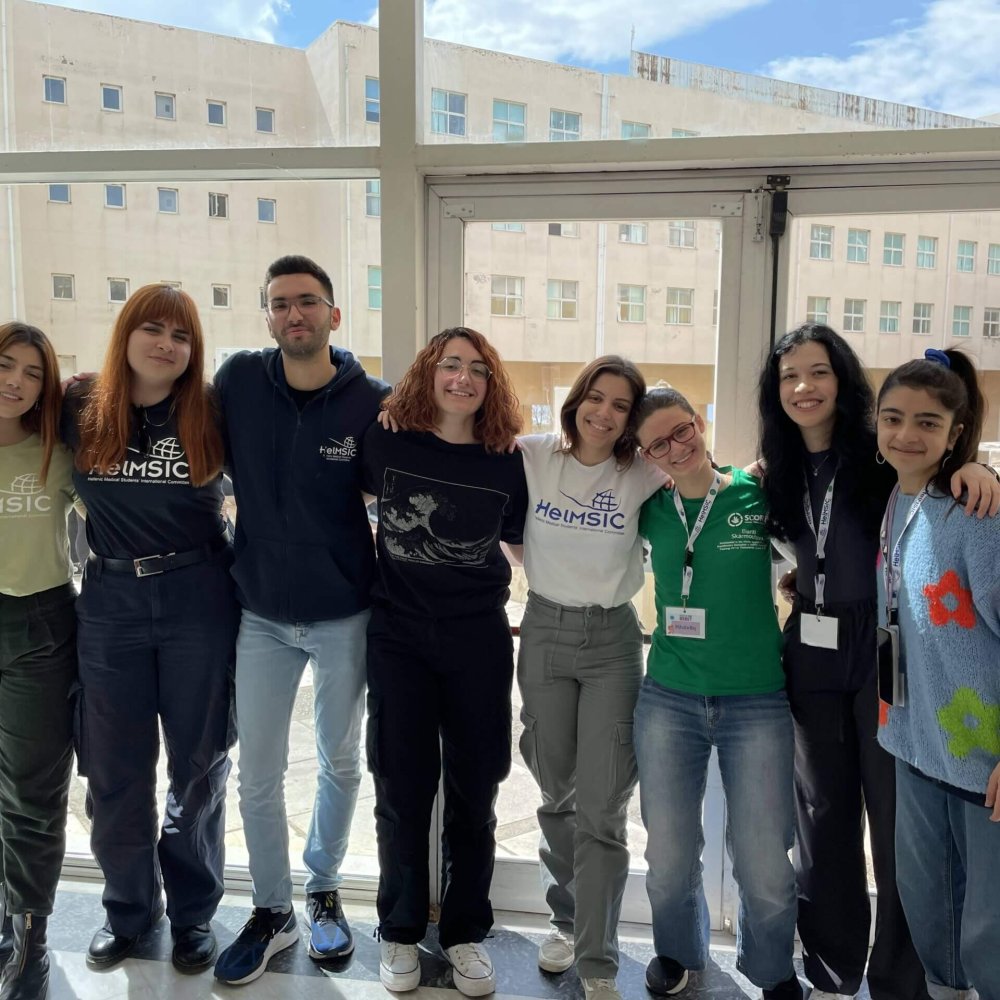
The Standing Committee on Human Rights is nationally coordinated by the National Officer on Human Rights (NORP), while local responsibilities are managed by Local Officers on Human Rights (LORP), who communicate the current issues and significance of human rights advocacy to their local committees.
Additionally, members of the Standing Committee include peer education trainers on Human Rights (Human Rights Trainers), who have received specialized training in non-formal adult education and human rights topics.
Any medical student interested in joining the action sector team is welcome.
Topics
The Standing Committee on Human Rights deals with topics related to Human Rights & Peace from the perspective of medical students and healthcare professionals.
These topics are divided into the following categories with corresponding sub-topics:
Displaced Populations
Individuals with Addictions
Homeless Individuals
Prisoners
LGBTQIA+ Community
Women
Children
Roma People
People with Disabilities
Mental Health
Peace and War
Violence Against Healthcare Services
Torture
Human Trafficking
Gender-Based Violence
Sustainable Development Goals
Democracy
Terrorism
Nuclear War
International Humanitarian Law
Disaster Medicine
Humanitarian Action
Human Rights Education
Human Rights Law
Right to Health
Universal Health Coverage
Discrimination and Intersectionality
Social Determinants of Health
Global Health
Climate Change
Human Rights Based Approach
Bioethics and Medical Ethics
Patient Rights
Pharmaceuticals
Euthanasia
Doctor-Patient Relationship
Patient-Centered Care
Cultural Sensitivity

International Affairs
The Standing Committee on Human Rights corresponds to the Standing Committee on Human Rights and Peace (SCORP) of the IFMSA and the Medical Ethics and Human Rights Pillar of the EMSA.
Projects
Chiron
LSD
Refugees’ Health Initiative
Chiron
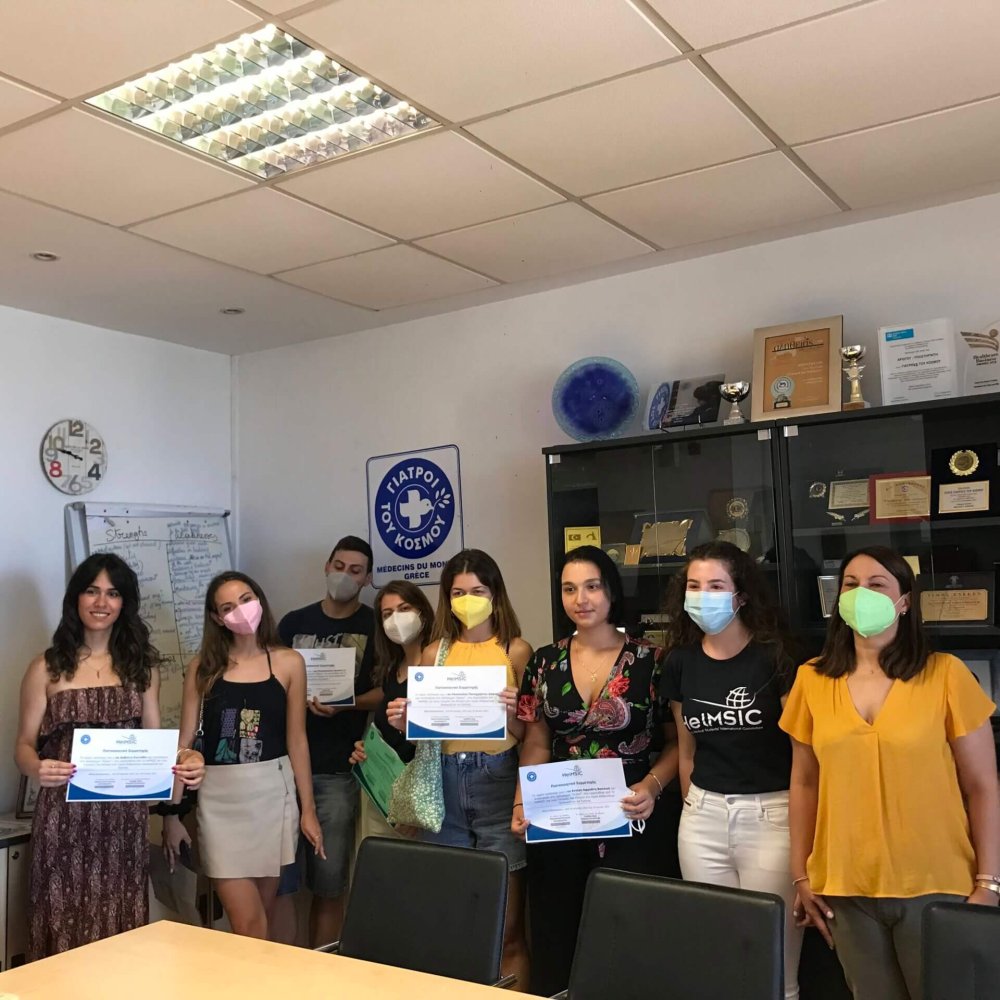
Chiron is a program that has been carried out since 2011 in collaboration with Médecins du Monde – Greece in Athens and Thessaloniki, and previously in Patras. It aims to inform and educate medical students about the access many vulnerable social groups have to healthcare.
The program begins with an informational seminar featuring talks by Médecins du Monde – Greece and continues with voluntary internships at the polyclinics and street actions of Médecins du Monde – Greece in Athens and Thessaloniki. The program is available to third-year and above medical students from all medical schools in the country and lasts for the entire academic year, extending into the summer.
The goals of the informational seminar include preparing participants for practical training at the open polyclinics and street actions, understanding the role and operational model of healthcare services provided by Médecins du Monde – Greece, and connecting vulnerability with healthcare access. This includes the current legal frameworks regarding the access of various populations residing in the country to public healthcare structures, along with the obstacles often involved.
The voluntary internship aims to familiarize students with the framework of providing healthcare to vulnerable social groups. Simultaneously, students are trained to apply a proper and human rights – compliant approach when interacting with patients. Thus, it emphasizes in the responsibility of healthcare professionals to advocate for the rights and health of vulnerable groups.
Since 2011, Médecins du Monde – Greece, founded in 1990, has been a constant external partner in the implementation of Chiron. This medical humanitarian non-governmental organization is a member of the International Network of Médecins du Monde.
The driving principle of the organization is that every human being has the right to humanitarian aid, regardless of gender, origin, sexual orientation, religion, ideology, or political belief. Consequently, Médecins du Monde operate based on the principles of neutrality and impartiality. However, maintaining their neutrality does not prevent them from speaking out against human rights violations when they witness them firsthand.
Since its founding, Médecins du Monde – Greece has created numerous programs both nationally and internationally, aiming to provide medical services to marginalized populations that do not have access to healthcare and require medical care.
LSD
Recognizing the lack of person-centered care as a taught soft skill for medical students and healthcare professionals, and identifying the issue of stigmatizing addictions in Greek society and the healthcare sector, HelMSIC, in collaboration with KETHEA, has been organizing the Learning Strategies about Drugs (LSD) program since 2011.
The program aims to holistically educate medical students in the field of addiction and raise their awareness to combat the associated stigma, emphasizing on their role as future healthcare professionals.
LSD was HelMSIC’s first organized effort to integrate one of its programs into the curriculum of the Greek medical schools, successfully embedding it into six out of seven medical schools by 2023. The program took the form of a two-day seminar where specialists and employees from KETHEA, along with human rights-trained HelMSIC instructors, educated medical students about the nature of addictions, their social and other implications, and proper approaches and communication methods for healthcare professionals working with individuals with addictions.
Continuing the collaboration with both KETHEA and medical schools, LSD will persist within medical schools through talks by KETHEA experts and as an educational module with interactive content that addresses the specific needs of medical students regarding this topic.
The Therapy Center for Dependent Individuals (KETHEA) has been our steadfast partner since 2011. It is the largest network of detoxification and social reintegration services in Greece, a key player in the national strategy against addictions, and a consultative organization to the United Nations Economic and Social Council (ECOSOC) on drug-related issues.
KETHEA’s pioneering effort began with ITHACA, Greece’s first therapeutic community established in 1983. KETHEA creates psychosocial treatment programs for different target groups. These programs address the problem of substance use and addiction comprehensively and without the use of substitutes, involving the family and society.
Today, KETHEA operates more than 100 units nationwide, in 31 cities and 20 correctional facilities, providing services to 15,000 recipients annually. KETHEA is also a leading Greek organization in prevention, professional training, and research in the field of addictions. It designs and implements prevention and health education programs in educational communities at all levels, high-risk behavior groups, and local communities, involving 20,000 individuals annually. Its educational and research programs, along with its national and international collaborations in these areas, aim to better understand the phenomenon of addictions, promote scientific knowledge and best practices, support and develop professionals in the field, and continuously improve the services provided to individuals with addictions and their families.
Refugees’ Health Initiative
HelMSIC, recognizing the need for equitable and holistic provision of health services, organizes the Refugees’ Health Initiative program, which was held for the first time in May 2025.
This project aims to equip medical students and future health professionals with necessary knowledge regarding health, rights, as well as the special situations and difficulties faced by mobile populations that affect their daily lives and access to quality health services.
It consists of an online seminar (webinar) with the participation of Civil Society organizations, more specifically Médecins du Monde Greece, Amnesty International Greece, INTERSOS Hellas and the Postgraduate Program “Global Health – Disaster Medicine” of the University of Athens and a pan-Hellenic campaign on HelMSIC’s social media.
Medical students and future healthcare professionals have a duty to advocate for equal care for all, regardless of origin or legal status. With programs like the Refugees’ Health Initiative, an important step is being taken towards ensuring a fair and inclusive healthcare system for all.